How to Design an Exhibition Stand for a Healthcare or Pharma Brand
Healthcare and pharmaceutical exhibitions are among the most competitive trade events in the world. Whether you’re showcasing innovative medical devices, pharmaceutical products, healthcare technologies, or specialized services, your exhibition stand serves as the face of your brand. Unlike many other industries, healthcare companies must balance creativity with professionalism, compliance, and trust. A well-designed stand can attract healthcare professionals, investors, distributors, and decision-makers, while a poorly planned booth may struggle to generate meaningful engagement.
Designing an effective healthcare exhibition stand is not simply about creating an attractive space. It involves strategic planning, audience understanding, regulatory awareness, and technology integration. Healthcare visitors often attend exhibitions seeking valuable information, product demonstrations, and expert consultations. This means your stand must be informative, welcoming, and easy to navigate. Leading exhibition specialists emphasize the importance of custom stand solutions, professional branding, and technology-enhanced visitor experiences to maximize exhibition success. Companies that invest in thoughtful stand design often achieve stronger brand recognition, better lead generation, and increased return on investment.
Why Healthcare and Pharma Exhibition Stands Require a Different Approach
Understanding Industry Regulations and Compliance
The healthcare and pharmaceutical industries operate under strict regulations. Any claims made about products, treatments, or technologies must comply with local and international guidelines. This significantly influences medical exhibition stand design because every visual element, product display, and marketing message must be accurate and approved.
Exhibition visitors often include doctors, hospital administrators, researchers, distributors, and government representatives. These professionals expect credible information and evidence-based messaging. As a result, your stand should focus on education rather than aggressive sales tactics. Product literature, digital displays, and demonstration materials should communicate scientific accuracy while remaining easy to understand.
Compliance considerations also affect booth layouts and interactive experiences. If you’re demonstrating medical equipment or pharmaceutical solutions, your presentation areas must support safe and effective communication. The goal is to establish trust from the moment visitors approach your stand.
Building Trust Through Professional Design
Trust is the foundation of every healthcare brand. Visitors are more likely to engage with a company that presents itself professionally and confidently. Your exhibition stand should reflect qualities such as reliability, innovation, safety, and expertise.
A clean and organized design instantly creates a positive impression. White, blue, and green color palettes are often associated with healthcare because they symbolize cleanliness, wellness, and trust. High-quality graphics, professional lighting, and well-trained staff further reinforce your brand image.
Think of your exhibition stand as a physical representation of your company’s reputation. If the space feels cluttered, outdated, or confusing, visitors may unconsciously associate those qualities with your products or services. A polished and carefully designed booth, on the other hand, demonstrates attention to detail and professionalism.
Defining Your Exhibition Goals
Lead Generation and Business Development
Before beginning any pharma trade show booth design, it is essential to establish clear objectives. Every design decision should support a specific business goal. For many healthcare and pharmaceutical companies, lead generation remains the primary focus.
Ask yourself who you want to attract. Are you targeting healthcare providers, distributors, investors, hospital procurement teams, or regulatory professionals? Different audiences require different approaches. A stand focused on medical device demonstrations may look very different from one promoting pharmaceutical research partnerships.
Lead capture systems should be integrated seamlessly into the booth design. Digital registration tools, QR codes, interactive forms, and consultation areas can help collect valuable visitor information without disrupting the experience.
Product Awareness and Brand Positioning
Some healthcare brands participate in exhibitions primarily to increase awareness. In these cases, visual impact becomes especially important. Your stand should clearly communicate your value proposition within seconds of attracting attention.
Large-scale graphics, compelling messaging, and product-focused displays can help visitors quickly understand what your company offers. The best exhibition stands tell a story rather than simply displaying information. Visitors should leave with a clear understanding of your brand’s mission, expertise, and unique advantages.
Key Elements of a Successful Healthcare Exhibition Stand
Clear Brand Messaging
One of the biggest mistakes exhibitors make is overwhelming visitors with excessive information. Healthcare products can be complex, but your exhibition messaging should remain simple and accessible.
Your primary message should be visible from a distance. Supporting messages can provide additional detail as visitors move through the stand. Consistent branding across signage, brochures, digital displays, and presentation materials helps reinforce recognition.
Strategic Layout and Visitor Flow
An effective healthcare exhibition stand encourages natural movement and engagement. Visitors should immediately understand where to go and what to explore. Open layouts typically perform well because they feel welcoming and accessible.
Consider creating distinct zones within your stand:
| Zone | Purpose |
|---|---|
| Welcome Area | Initial visitor engagement |
| Product Display Zone | Showcase products and technologies |
| Demonstration Area | Live presentations and interactions |
| Meeting Space | Private discussions |
| Lead Capture Point | Collect visitor information |
A well-planned layout reduces congestion and creates a more enjoyable experience for visitors.
Product Demonstration Areas
Healthcare professionals often want hands-on exhibition stand experience before making purchasing decisions. Product demonstration zones allow visitors to interact with equipment, software, or technologies directly.
Demonstrations should be easy to follow and supported by knowledgeable staff. Live presentations create opportunities for meaningful conversations and help differentiate your brand from competitors.
Choosing the Right Medical Exhibition Stand Design
Open Concept vs. Enclosed Booths
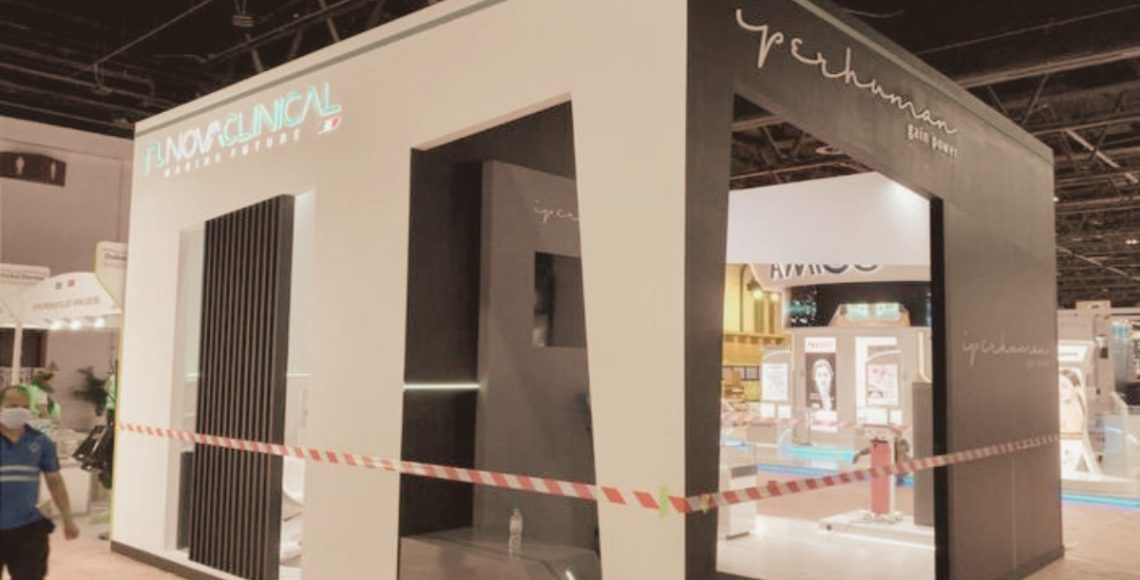
Open-concept stands are increasingly popular because they encourage visitor interaction. They create a welcoming environment and make it easier for attendees to enter without feeling pressured.
Enclosed areas still have value, particularly for healthcare brands conducting confidential discussions. Pharmaceutical companies often require private meeting spaces for conversations involving partnerships, clinical data, or business negotiations.
The ideal solution often combines both approaches, offering open engagement areas alongside dedicated meeting rooms.
Modular vs. Custom-Built Stands
Healthcare exhibitors frequently participate in multiple trade shows each year. Choosing between modular and custom-built exhibition stand designs depends on your long-term strategy.
| Feature | Modular Stand | Custom Stand |
|---|---|---|
| Cost | Lower | Higher |
| Flexibility | High | Medium |
| Brand Impact | Moderate | High |
| Reusability | Excellent | Good |
| Customization | Limited | Extensive |
Custom exhibition stands often deliver the strongest visual impact and can be tailored to specific healthcare audiences. Industry exhibition stand design leaders such as Level International specialize in bespoke exhibition stand solutions designed to align with brand objectives and event requirements.
Technology Integration in Pharma Trade Show Booth Design
Interactive Displays and Touchscreens
Modern healthcare exhibitions increasingly rely on technology to enhance engagement. Interactive touchscreens allow visitors to explore product information at their own pace. Digital catalogs reduce the need for printed materials while providing a more dynamic experience.
Healthcare companies can use interactive displays to showcase clinical data, patient outcomes, product specifications, and research findings. Visitors often spend more time engaging with digital content than with traditional printed materials.
Digital Presentations and Product Demonstrations
Large screens, video walls, and multimedia presentations help healthcare brands communicate complex information more effectively. Visual storytelling makes technical concepts easier to understand and remember.
Industry experts note that integrating audiovisual solutions into exhibition stands creates more immersive visitor experiences and strengthens engagement levels.
Creating a Comfortable Visitor Experience
Meeting Spaces and Consultation Areas
Healthcare professionals value meaningful conversations. Providing dedicated meeting areas allows your team to discuss products, partnerships, and solutions in a comfortable environment.
These spaces should be quiet, private, and equipped with the necessary technology for presentations and discussions. Comfortable seating and thoughtful design encourage longer conversations and stronger business relationships.
Lighting, Colors, and Visual Appeal
Lighting plays a critical role in medical exhibition stand design. Proper illumination highlights products, improves visibility, and creates an inviting atmosphere. Bright, clean lighting is generally preferred in healthcare environments because it reinforces professionalism and trust.
Color selection should align with your brand identity while maintaining a healthcare-focused aesthetic. Consistency across graphics, displays, uniforms, and printed materials strengthens brand recognition and creates a cohesive visitor experience.
Common Mistakes to Avoid
Overcrowded Graphics
Healthcare brands often attempt to include too much information within a limited space. This can overwhelm visitors and reduce message effectiveness.
Focus on a single primary message supported by clear visuals and concise supporting content. Simplicity often creates a stronger impact than excessive detail.
Ignoring Visitor Engagement
A beautiful stand alone is not enough. Visitor engagement should remain a top priority throughout the design process.
Interactive experiences, live demonstrations, knowledgeable staff, and technology-driven content help maintain visitor interest. The most successful exhibition stands encourage participation rather than passive observation.
Working with Professional Exhibition Stand Builders
Partnering with experienced exhibition stand builders can significantly improve exhibition outcomes. Professional contractors understand venue regulations, logistics requirements, branding strategies, and visitor behavior patterns. They can transform your objectives into a functional and visually compelling exhibition environment.
Companies like Level International provide end-to-end exhibition solutions, including stand design, fabrication, graphics, lighting, installation, and project management. Their turnkey approach helps exhibitors focus on business goals while ensuring flawless execution throughout the event lifecycle.
Reviewing previous healthcare-related projects and custom stand portfolios can also provide valuable inspiration and confidence when selecting a design partner. Healthcare brands benefit from working with teams that understand the unique challenges associated with medical and pharmaceutical exhibitions.
Conclusion
Designing a successful healthcare exhibition stand requires much more than attractive visuals. It involves strategic planning, regulatory awareness, visitor engagement, and a strong understanding of healthcare audiences. Whether you’re developing a sophisticated pharma trade show booth design or a highly interactive medical exhibition stand design, every element should support your brand objectives and create meaningful visitor experiences.
The most effective exhibition stands combine professional branding, clear messaging, engaging technology, comfortable meeting spaces, and thoughtful visitor flow. By focusing on trust, education, and interaction, healthcare and pharmaceutical companies can create exhibition environments that attract attention, generate leads, and strengthen industry relationships long after the event ends.
FAQs
1. What makes a healthcare exhibition stand different from other exhibition stands?
Healthcare exhibition stands must balance creativity with professionalism, compliance, and educational value. Visitors expect credible information and a trustworthy environment.
2. What is the most important feature of a pharma trade show booth design?
Clear messaging and visitor engagement are often the most critical factors. Attendees should immediately understand your brand and value proposition.
3. Should healthcare brands use custom or modular exhibition stands?
Custom stands provide stronger branding opportunities, while modular stands offer flexibility and cost savings for companies attending multiple events.
4. How can technology improve medical exhibition stand design?
Interactive displays, touchscreens, digital presentations, and audiovisual solutions increase visitor engagement and help explain complex healthcare concepts.
5. How do I maximize lead generation at healthcare exhibitions?
Create clear visitor pathways, provide interactive experiences, use digital lead capture tools, and ensure your staff are trained to engage attendees effectively.